
Quick Information
| Tuition Fee | £42,700–£58,600/year (overseas undergraduate, 2026–27) |
|---|---|
| Last Verified Date | November 10, 2026 |
Imperial College London ranks 2nd in the QS World University Rankings 2026, making it one of the best universities in the world. Founded in 1907, it is dedicated entirely to science, engineering, medicine and business — there are no humanities departments — and that focus has produced world-leading research in fields from artificial intelligence to climate science and vaccine development.
Course Fees
| Programme | Tuition fee (per year, overseas, 2026–27) | Notes |
|---|---|---|
| Undergraduate — mathematics | £42,700 | Per year. |
| Undergraduate — most science, engineering and computing | £45,500 | Per year. |
| Undergraduate — medicine | £58,600 | Per year; £61,550 for 2027 entry. |
| Taught postgraduate | £34,500–£78,000 | Depending on the programme; for example MSc Computing £46,000–£47,500 and the MBA £78,000. |
London is one of the world’s most expensive cities, so accommodation and living costs need careful planning. Check the exact fee for your course on the official Imperial fees page before applying: Imperial College London official website.
Student Reviews
We do not publish student reviews written by us, and we do not invent ratings. Read what students and visitors actually say on the university’s real Google Maps reviews: Imperial College London on Google Maps. If you have studied at Imperial and want to share your experience with future applicants, tell us through our Admission Inquiry page.
Admission Process
Undergraduate applications go through UCAS, with an October deadline for medicine and a January equal-consideration deadline for other courses. Study starts in October. Entry is highly competitive, and many courses ask for top grades in mathematics and science subjects. Imperial sets two English levels. The Standard level asks for IELTS 6.5 overall with 6.0 in each element, or TOEFL iBT 92. The Higher level, used by the Business School, Computing and Medicine, asks for IELTS 7.0 overall with 6.5 in each element, or TOEFL iBT 100.
| Date | Event |
|---|---|
| October (the year before entry) | UCAS deadline for medicine |
| January (the year of entry) | UCAS equal-consideration deadline for other undergraduate courses |
| October | Study starts |
This university does not publish a downloadable brochure — check its official admissions page for the latest information.
Placements and Careers
Imperial does not publish a single overall placement or employment rate that we can verify, so none is given here. Graduate destinations are reported through the Graduate Outcomes survey — a national survey of graduates 15 months after they leave university, run by HESA (the Higher Education Statistics Agency). The university’s careers service runs one of the largest employer programmes in the country, and its location in London puts students close to the city’s technology firms, hospitals, banks and start-ups. See the official Imperial website for the latest careers information.
Rankings
QS World University Rankings 2026 place Imperial College London 2nd in the world.
Campus Gallery
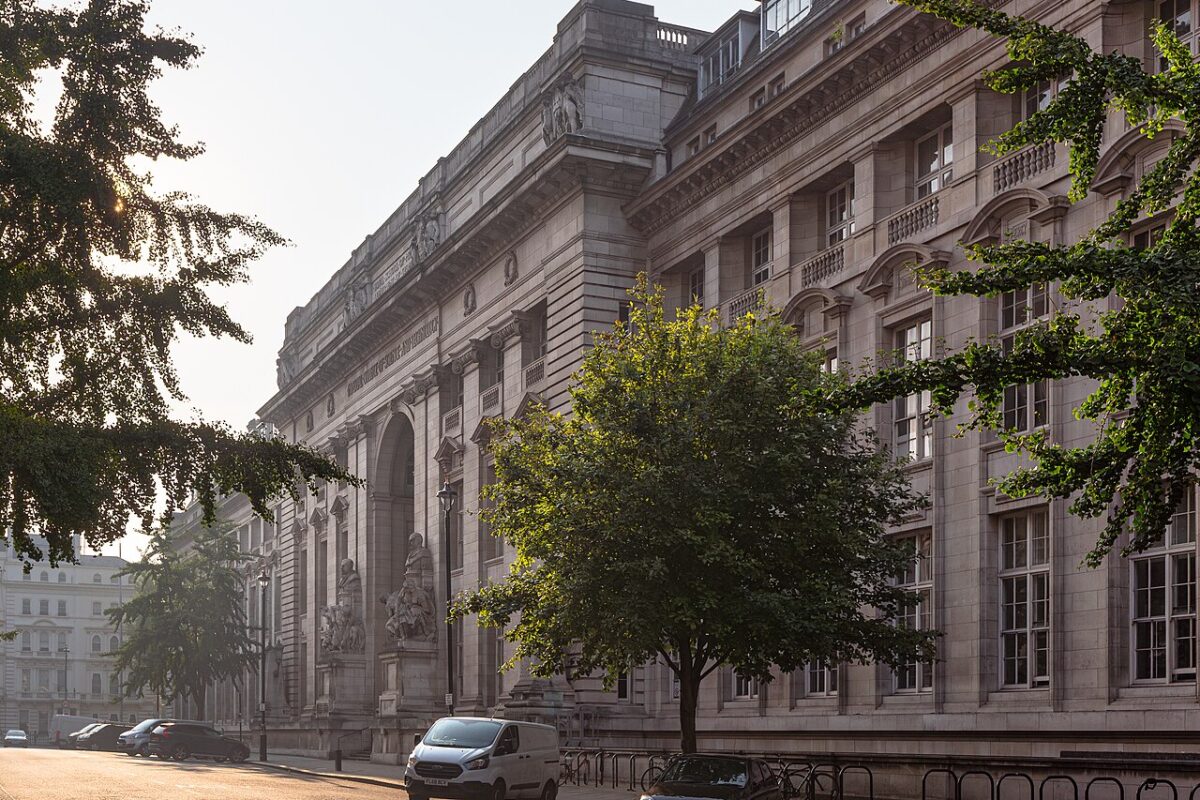
The featured image above shows the Royal School of Mines on the South Kensington campus — a verified photograph of the university’s own campus. No additional gallery photographs have been added yet: extra campus photos will be added only once each one is verified as Imperial’s own campus. If you have a freely-licensed photograph of the Imperial campus, tell us through the Admission Inquiry page.
Campus and Infrastructure
Imperial’s main campus is in South Kensington, one of London’s most famous cultural quarters, next to the Natural History Museum, the Science Museum and the Victoria and Albert Museum. Students live in one of the world’s great global cities, with its museums, theatres, tech companies and hospitals all within reach. Campus facilities, libraries, housing and sports vary by department — check the official pages of the department you are interested in for the current details.
Faculties and Departments
Imperial has four faculties: Engineering, Medicine, Natural Sciences and Business. Undergraduate and postgraduate courses cover computing, engineering in all its branches, medicine, physics, chemistry, life sciences, mathematics and business. Because the university is specialised, students work alongside specialists in their field from the first day.
Compare with Similar Universities
Compare universities side by side with our Compare Universities tool — pick any two universities and see their fees, rankings, intakes and degree levels together. Similar universities on this site: University of Oxford (QS 2026: 4th in the world), University of Cambridge (QS 2026: 6th in the world), and ETH Zurich (QS 2026: 7th in the world).
Frequently Asked Questions
How do international students apply to Imperial?
Undergraduate applications go through UCAS, with an October deadline for medicine and a January equal-consideration deadline for other courses. Study starts in October. Entry is highly competitive, and many courses ask for top grades in mathematics and science subjects.
What English score does Imperial ask for?
Imperial sets two English levels. The Standard level asks for IELTS 6.5 overall with 6.0 in each element, or TOEFL iBT 92. The Higher level, used by the Business School, Computing and Medicine, asks for IELTS 7.0 overall with 6.5 in each element, or TOEFL iBT 100.
How much is tuition at Imperial for international students?
Overseas undergraduate tuition for 2026–27 is £42,700 a year for mathematics, £45,500 a year for most science, engineering and computing courses, and £58,600 a year for medicine. Taught postgraduate courses range from about £34,500 to £78,000 a year, depending on the programme.
What can I study at Imperial?
Undergraduate and postgraduate courses cover computing, engineering in all its branches, medicine, physics, chemistry, life sciences, mathematics and business. The university is dedicated entirely to science, engineering, medicine and business — there are no humanities departments.
When does study start at Imperial?
In October. There is one main start each year, so applications, including the UCAS deadlines above, are planned around an October start. Check the official course page on imperial.ac.uk for your programme’s deadline.
Scholarships
Imperial’s own scholarships are listed on the official Imperial website — check the funding pages on imperial.ac.uk for the current awards, eligibility and deadlines, as no Imperial award has been verified for this page. Also see the scholarships listed on this site for study in the UK: Rhodes Scholarship, Gates Cambridge Scholarship, Chevening (closed 6 October 2026), GREAT Scholarships and Commonwealth Shared Scholarships. Open and closed status is shown on each scholarship’s own page; expired awards are never shown as open.
Address and Location
Imperial College London
Exhibition Road, South Kensington, London SW7 2AZ, United Kingdom