Quick Information
| Tuition Fee | DKK 45,000–120,000/year (non-EU, approximate); EU/EEA/Swiss pay no tuition |
|---|---|
| Last Verified Date | November 10, 2026 |
The University of Copenhagen, founded in 1479, is Denmark’s oldest and highest-ranked university, at 101st in the QS World University Rankings 2026. It is one of Scandinavia’s largest centres of research and education, with ten Nobel laureates among its researchers and alumni, including Niels Bohr. Its strengths in life sciences, medicine and the natural sciences are recognised worldwide, and it sits in one of Europe’s happiest and most liveable capitals.
Course Fees
| Programme | Tuition fee (per year) | Notes |
|---|---|---|
| Bachelor’s (EU/EEA/Swiss) | No tuition | Students from the EU, EEA and Switzerland pay no tuition at all. |
| Master’s (EU/EEA/Swiss) | No tuition | Students from the EU, EEA and Switzerland pay no tuition at all. |
| Bachelor’s / Master’s (non-EU) | Roughly DKK 45,000–120,000 | Depending on the programme; laboratory and clinical programmes are at the higher end. A non-EU application deposit of DKK 1,120 applies. |
Copenhagen is an expensive city, but Denmark’s high quality of life, safe environment and strong student support make it a popular choice. Check the exact fee for your programme on the official University of Copenhagen fees page before applying: University of Copenhagen official website.
Student Reviews
We do not publish student reviews written by us, and we do not invent ratings. Read what students and visitors actually say on the university’s real Google Maps reviews: University of Copenhagen on Google Maps. If you have studied at the University of Copenhagen and want to share your experience with future applicants, tell us through our Admission Inquiry page.
Admission Process
Master’s programmes start in September, and applications run from 1 October to 1 February, though some programmes close on 15 January for non-EU students and some close on 1 March for EU/EEA students. Bachelor’s applications close on 15 March — and all bachelor’s programmes are taught in Danish, so international students usually come for master’s degrees, which are offered in English across the faculties. Master’s applicants need IELTS Academic 6.5 overall with 6.0 in each element, or TOEFL iBT 83, for the standard English B level; some programmes require the higher English A level of IELTS 7.0.
| Date | Event |
|---|---|
| 1 October – 1 February | Master’s applications (September start) |
| 15 January | Some master’s programmes close for non-EU students |
| 1 March | Some master’s programmes close for EU/EEA students |
| 15 March | Bachelor’s applications close (taught in Danish) |
This university does not publish a downloadable brochure — check its official admissions page for the latest information.
Placements and Careers
The University of Copenhagen does not publish a single overall placement or employment rate that we can verify, so none is given here. The university’s careers service supports students and graduates with advice, events and employer connections, and the university’s links with Denmark’s pharmaceutical and biotechnology companies give students practical experience and strong career prospects. See the official University of Copenhagen website for the latest careers information.
Rankings
QS World University Rankings 2026 place the University of Copenhagen 101st in the world — Denmark’s highest-ranked university.
Campus Gallery
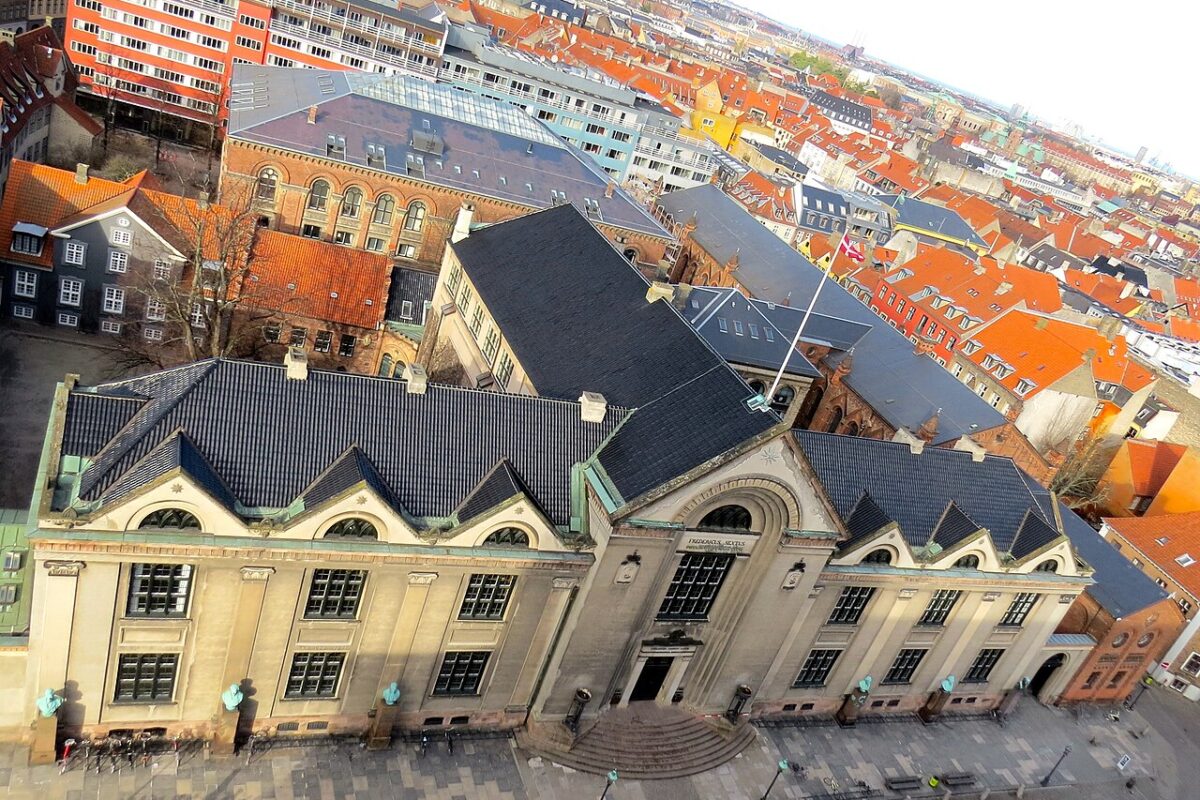
The featured image above shows the university main building on Frue Plads, seen from above — a verified photograph of the university’s own campus. No additional gallery photographs have been added yet: extra campus photos will be added only once each one is verified as the University of Copenhagen’s own campus. If you have a freely-licensed photograph of the campus, tell us through the Admission Inquiry page.
Campus and Infrastructure
Copenhagen is regularly ranked among the world’s most liveable cities, famous for its cycling culture, its harbour, its design and its food scene. The university’s campuses are spread across the city, from the historic centre to the modern science park at Nørrebro. Students enjoy a safe, green and relaxed city, with easy train access to Sweden and the rest of Scandinavia. Campus facilities, libraries, housing and sports vary by campus — check the official pages of the campus you are interested in for the current details.
Faculties and Departments
The university has six faculties. The most popular areas for international students are life sciences, medicine and global health, environmental science, biotechnology, law and the social sciences. Bachelor’s degrees are taught in Danish, so international students usually come for master’s degrees, which are offered in English across the faculties. The university is especially strong in health and life sciences, with close links to Denmark’s pharmaceutical and biotechnology industries.
Compare with Similar Universities
Compare universities side by side with our Compare Universities tool — pick any two universities and see their fees, rankings, intakes and degree levels together. Copenhagen is the only university in Denmark on this site. The closest peer on this site by level and subject is: University of Helsinki (Finland, QS 2026: joint 116th in the world).
Frequently Asked Questions
Do EU students pay tuition at the University of Copenhagen?
No — students from the EU, EEA and Switzerland pay no tuition at all. Non-EU students pay roughly DKK 45,000–120,000 a year depending on the programme, with laboratory and clinical programmes at the higher end, and a DKK 1,120 application deposit.
Can I study a bachelor’s degree in English at Copenhagen?
No — bachelor’s degrees are taught in Danish. International students usually come for master’s degrees, which are offered in English across the faculties.
What English score does Copenhagen ask for?
Master’s applicants need IELTS Academic 6.5 overall with 6.0 in each element, or TOEFL iBT 83, for the standard English B level; some programmes require the higher English A level of IELTS 7.0.
When do I apply for a master’s at Copenhagen?
Master’s programmes start in September, and applications run from 1 October to 1 February, though some programmes close on 15 January for non-EU students and some close on 1 March for EU/EEA students. Bachelor’s applications close on 15 March, but remember that bachelor’s teaching is in Danish.
Can I stay in Denmark after graduating?
The post-study rules changed on 1 October 2026. Bachelor’s and master’s graduates whose study-permit application was made on or after that date can seek work in Denmark for up to 1 year, without accompanying family; PhD graduates keep up to 3 years and family rights. Applications made before 1 October 2026 keep the earlier 3-year job-seeking period. Check the current rules on studyindenmark.dk before planning around them.
Scholarships
The University of Copenhagen’s own scholarships are listed on the official University of Copenhagen website — check the funding pages on ku.dk for the current awards, eligibility and deadlines. Also see the Erasmus Mundus Joint Masters 2027 on this site (each programme sets its own deadline; 15 January 2027 is the most common date, not a universal one). Open and closed status is shown on each scholarship’s own page; expired awards are never shown as open.
Address and Location
University of Copenhagen
Nørregade 10, 1165 Copenhagen K, Denmark